Image Processing & Machine Learning Curriculum
Outreach Education Project
Snapshot Overview
Project Dates: January 2023 through May 2023
Technical Skills Used:
-
Python Language Programming
-
TensorFlow Package Integration
-
Digital Image Processing
-
Machine Learning Model Development
-
Machine Learning Model Training
-
Machine Learning Model Testing and Evaluation
- Machine Learning Model Deployment
Project Outcome(s):
-
Successful development of a four module training program for developing image processing and machine learning skills.
-
Development and documentation of an applied image-based machine learning model in the form of a case study.
-
Successful onboarding of a group of five undergraduates and two graduate students as subject matter experts in foundational concepts of machine learning and image processing applications.
The Image Processing and Machine Learning Curriculum is an idea that was formed through an attempt to create a special topic program for the AFRL Career STREAM program. The AFRL Career STREAM program was a 6-week paid apprenticeship program that paired high school student apprentices with college student mentors to form project teams. Funding for the Career STREAM program held for the program for about 4 years but was unable to be renewed for the summer of 2025. I had the wonderful opportunity to attend some brainstorming meetings on how to keep portions of the program alive, and we were able to develop a special topic program tied to the Career STREAM program. This special topic became known as the Image Processing and Machine Learning Program.


The Image Processing with Machine Learning Program funded a group of undergraduate and graduate students to become comfortable with image processing, machine learning, and computer vision applications in order to develop a detailed curriculum for learners of all ages to introduce themselves to the fundamentals concepts of these applications. As a part of my role in developing this program, I was named as the Program Coordinator and Content Development Lead. My role involved me teaching and guiding the undergraduate and graduate student content developers in their computer vision related skills. I had the honor of leading our group of students in creating and testing our content throughout the duration of the project. I talk more about my role as the Program Coordinator for the Image Processing and Machine Learning Program in my project leadership portfolio. The remainder of this page will focus on the remarkable content that our group produced and how it can be utilized in many learning environments.
More On Our Curriculum
The Image Processing and Machine Learning curriculum is composed of four interconnected modules. These four modules are designed to be completed sequentially, with activities being skippable if their portrayed concept is already fairly understood by the audience.
Module 1: Introduction to Python Programming Module 1 is focused on introducing learners to scripting and programming using Python. Concepts covered in Module 1 include writing pseudocode, basic operations using Python, user inputs in Python scripts, and more!
Module 2: Introduction to Image Processing Module 2 is focused on introducing learners to the fundamental concepts of image processing. This module is meant to reinforce the importance of understanding the translation of images as they are read into a computer. The concepts introduced in this section are a basis for the beginning machine learning concepts introduced in later modules.
Module 3: Introduction to Statistical Analysis and Machine Learning Module 3 is focused on introducing learners to the statistical concepts applied in machine learning algorithms. This module provides knowledge and practice in applying statistical concepts in image processing activities.
Module 4: Introduction to Python Programming Module 4 is focused on building upon all of the previous modules. This module leads learners to consider how the concepts they have learned are used in real-world applications. This modules also describes the processes to be followed in applying these concepts into the learner's own projects.


In developing our curriculum, the group created interactive activities that involved using or understanding bite-sized components of the overall concepts which led to an easy-to-follow curriculum. Additionally, our content developers worked through creating code, worksheets, answer keys, and descriptions for activities to provide all the necessary information for learners to get involved with the material. We set up an Instructor Resources Portal for teachers and instructors to receive access codes to access answer keys and unit plans for the activities throughout the curriculum. We did this in order to make our curriculum assignable in teaching environments. If a teacher wants to assign activities to a group of students, they can provide links to the respective activities and avoid the possibility of the answer key being used in completing worksheets and/or activities. Even following the conclusion of the program, I have been staying up to date with the curriculum website, and issues that a user encounters are consistently being dealt with within a day of the issue being brought to my attention.
.jpg)
A Case Study With Real-World Applications
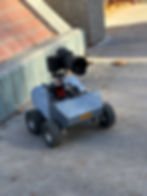
Our team documented a free-to-access case study following the implementation of a machine learning model onto a real-world robot. This case study goes through all aspects of the problem, starting with discovering the problem itself and designing how image processing and machine learning can be applied in the solution.